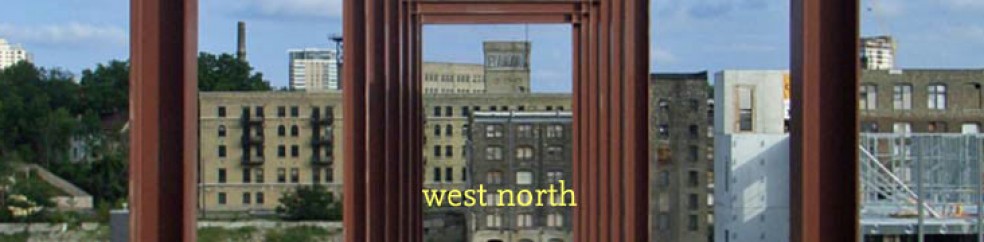
Steve Mouzon’s “site visit of a factory making Katrina Cottages”:http://mississippirenewal.com/slides/06-08-23-slide1.html raises an interesting conundrum: in an age of instant prototyping (a porch was “keyed… into the computer, the computer had done the truss design, fabricated the steel, [and] they assembled it” in “eight minutes”), when does architecture become industrial design?
Category Archives: urban design
NU myths
Jeff Speck, “in an interview”:http://www.metropolismag.com/html/urbanjournal_0903/speckinterview.html ostensibly about his (then-new) role in NEA’s urban design program, reverts back to the role of _Suburban Nation_ co-author (and incidentally, initial pencil pusher for many of CNU’s original incorporation papers) as he politely (as he always is) debunks several myths that Julie Taraska of _Metropolis_ had back in 2003:
bq. The New Urbanists have a bad reputation among Modernists because many NU projects use traditional architecture, which is considered reactionary. In fact, it’s subversive: Traditional architecture is used to mask progressive social ideals that Modernism, by manifesting them, can sabotage. But there is nothing in the Charter of the New Urbanism that privileges any architectural style, and I would be very discouraged if my appointment were seen as anti-Modernist, or if the most progressive Modernists stopped applying for grants…
_Q. The NU principles of walkability, denser layout, and mixed-income housing apply less to urban cores than to edge cities and suburbs…_
bq. Forgive me for disagreeing, but the principles you describe are the very essence of good city design, particularly at the urban core. The New Urbanists are perhaps best known for applying these principles, leaned from urban cores, to other parts of the metropolis. But half of the work of DPZ and of the New Urbanists is in cities, and much of that is downtown. I personally worked on a good half-dozen downtown revitalization master plans while at DPZ… The U.S. Conference of Mayors could benefit from an Urbanism 101 class, in which as many mayors as will listen are taught the basics of good design–the items you mention, plus mixed-use, the “24-hour city” concept, improving transit, form-based building codes, Main Street preservation, etc…
And a closing word on social justice:
bq. We must acknowledge and fight the ways that planning has actually created or exacerbated inequality. In the new suburbs, where kids can’t walk to activities, it’s usually the mom who becomes the soccer mom. And when jobs flee the city for cheaper land in the office park, the non-driving poor can’t get to work. Myron Orfield has demonstrated how the inner-city poor subsidize Minneapolis’ ex-urban expansion. These are inequalities caused by planning, and they pose a larger target for our efforts.
Dallas growing up
The Dallas Morning News is running an ongoing series called “Uptown Aspirations,” on the sudden emergence of a high-style mixed-use quarter — “emphasizing streets, blocks and squares”:http://www.guidelive.com/sharedcontent/dws/ent/stories/DN-victory_0625gl.State.Bulldog.2125c9.html — adjacent to its 9-to-5 downtown of gaudy PoMo contraptions. Some articles are appropriately critical of developers’ hesitant first steps to learn an urban language; others fawningly gush over the arrivistes (particularly “the W hotel”:http://www.dallasnews.com/sharedcontent/dws/pt/slideshows/2006/06/whotel_2006) with the boosterism you’d expect from Big D. Still, Victory Park’s concept of a $4 billion new luxury neighborhood (with a plan by Elkus/Manfredi of point towers atop streetwall blocks) that “embraces density, clustering buildings together that relate to each other and to their surroundings… where individual buildings talk to one another in a shared language instead of shouting at the top of their lungs” sounds like a big step forward for one of America’s paragons of sprawl. As David Dillon, the architecture critic writes, “It’s basic stuff, yet so rare in Dallas that it seems exotic.”
The package is a rare comprehensive review of a case study of how urbanism has a way of showing up even where it’s least expected — namely, in sprawling, polycentric Sunbelt cities like Atlanta, Dallas, and L.A., who supposedly owe their appeal to their rejection of traditional urbanism — and thus, why we need New Urbanism more than ever. Showy modernism has not worked for Dallas, riddled with freeways and one-off look-at-me architectural statements; indeed, only a wealthy impresario can afford to take a financial risk on something as basic as building a public square. (In contrast, the developer of a nearby shopping center claims that his lenders required parking in front, an urban mistake that will be with the area for decades to come.) The spontaneous flowering of urbanism in the Sprawl Belt shows why the attitude of some anti-New Urbanists (“why do we need new urbanism? doesn’t the old urbanism suffice?”) smacks so much of élitist Eastern Establishment provincialism: most Americans live in an environment where there is NO urbanism, where old urbanism simply does not exist; 75% of America was built within the past fifty years. The alternative to New Urbanism isn’t old urbanism, it’s sprawl.
Three side notes:
1. Ross Perot, Jr. is the developer; EDS, the company founded by his father, developed Legacy Town Center north of Dallas. Now, which former presidential candidate has done more for NU: Gore or Perot?
2. The earlier plan described by Dillon’s article (low-rise, brick, still around an arena) somewhat reminds me of the Arena District in Columbus: essentially two stadia, an office campus, an entertainment complex, and many apartments/condos, but wrapped up in brick and placed on nicely sized blocks adjacent to downtown. That project’s patron is Nationwide Insurance, wanting to build an urban neighborhood to retain its own workforce. Like Victory, it’s pretty relentlessly upscale and sanitized.
3. Victory was running ads for condos in Dwell magazine a few months ago.
Shimmering boxes do not a city make
Paul Goldberger, writing in Metropolis, sees an opportunity for urbanism lost amidst the gleaming curtain-wall residential towers:
bq. When glass residential buildings were rare, they had a graceful effect on the cityscape: light objects playing off against masonry. But just as the Seagram Building lost some of its luster when its masonry neighbors on Park Avenue were replaced by inferior glass buildings, we are beginning to run the risk of seeing glass become not the appealing counterpoint to the stone city but the new standard. And it doesn’t work well at that. The allure of glass — its brittleness and precision, the way it seems to bedazzle and at the same time keep you at a distance — can sometimes make beautiful buildings, but it’s less likely to make appealing street-scapes. This is not the place to get into Modernism’s urbanistic failings, which involve far more than material choices, but walking alongside a glass building doesn’t provide the subtle embrace that richly textured stone or even brick does. It is a paradox: stone, heavy and opaque, pulls you closer; glass, light and transparent, keeps you at a distance. I have tried to avoid using words like warm and cold, but it is hard not to conclude that glass is cold and masonry warm. A cold object can be stunningly beautiful, but one cannot make a whole street out of them, and streets are the mortar of civilizing cities. Masonry buildings make streets; glass buildings make objects.
Vancouver has partially solved the problem by requiring heavier materials toward ground level while allowing the towers to float into the sky, but not quite: the overall feeling (perhaps intentional) is still far too airy and light, with little of the intimacy one expects of urban spaces. The literal lack of dirt and grit in the glass and steel confines of recent spaces, unrelieved even by the ubiquitous textured cement of Brutalist-era modernism, makes one wonder how these places will age.
Envy, avarice…
Kinch at Building Big Easy chalks up Modern envy with New Urbanists’ sweep of Gulf Coast planning as another example of being out of touch.
bq. The New Urbanists are taking the initiative in getting in touch with the residents, listening and making proposals. The Modernists, on the other hand, write articles in Artforum magazine about why New Urbanism is bad.
Yow!
The nominations are in
The entries for the “2006 Charter Awards”:http://cnu.org/awards2006 have been pouring into the office. It has a bit of a Christmas-y air: deliverymen stumbling in with groaning stacks of colorful FedEx boxes, everything diligently wrapped and awaiting discovery.
A cursory look through shows some very promising entries, some formulaic plans, and some pretty obvious “well, if they can win with that, I can win with this” one-upsmanship. Now that it’s in its sixth year, the second generation of New Urbanist architects is well represented, and potentially a third identifiable generation is emerging — people who may not have thought of their work as New Urbanist in the past but are willing to bet real money that it is now.
Perhaps most interesting: several outstanding (in my opinion, but what do I know?) entries feature modern-ist architecture, even though the jury this year includes super-classicist (e.g., inaugural winner of the “Driehaus Prize”:http://www.driehausprize.org) Leon Krier. I can’t disclose any further details until April, but suffice to say the judging will be very interesting indeed.
Socially irresponsible architects
In a Metropolis Magazine interview with Martin Pedersen, pathbreaking architectural critic Ada Louise Huxtable (and still among the best still working, thanks to her historian’s “long view” and clear style) lambasts the navel-gazing turn in architecture that has undermined its sense of responsibility:
bq. Having lost its sense of social responsibility, architecture must answer to something broader than just being the latest thing–edgy, trendy, chic. All this really turns me off. There’s something missing in architecture criticism today, which is a way of measuring the buzz against something bigger and more important. And there’s a kind of sycophantism. I find it kind of sickening, because so much is being missed that is important.
LA cottage housing
The City of LA recently launched a design competition for prototype bungalow/cottage courts (which they’re oddly calling townhouses) called Small Lots, Smart Designs:
bq. In trying to meet the need for housing, the City of Los Angeles adopted the Small Lot Subdivision Ordinance #176354 that provides an entirely new housing option: allowing individuals or developers to purchase a lot zoned for commercial or multi-family residential use and subdivide into much smaller lots than previously required with no setback requirement between the subdivided lots.
Cottages give people the opportunity to own single family, possibly (semi-)detached housing — which, for better or worse, does carry a market premium — without the financial or time costs of a large yard. Low-rise construction is subject to less stringent building codes and potentially greater design flexibility, which could also further reduce the cost of housing.
Corbu
Who would’ve known? “Corbu” (and its counterpart, “petit Corbu”) is a variety of red grape used for winemaking in the Pyrenees. Of course, it’s “very minor and always blended”:http://www.french-regional-wines.co.uk. Saw it on a wine list last week and, well, wasn’t terribly pleased with the inky, tannic result, but that could have been the blend.
Atlantic Station retail

Neo-Georgian “lofts” with 22-30′ ceilings surmount shops facing the green at Atlantic Station. The scale of the dual-height windows and overall massing are problematic, given that Georgian is so strongly associated with residential scales: if you’re going to build a loft, make it look like a loft building, not a house in Georgetown. The penthouses are trying to disappear, but definitely don’t. The ground floor seems awfully underscaled relative to the rest of the buildings and given its economic importance to the building.
More importantly, all of this sits atop a parking podium of equal height — hidden thanks to a slope, but nonetheless one heck of a lot of parking. The dozen-odd entrances to the parking are a little too well visible at times.
Global warming starts at home
Gristmill’s David Roberts writes that linking public health to sprawl, via New Urbanism (and citing a so-so Newsweek article on the subject), will also help to bring the politics of global warming down to a level that most people can comprehend–their health:
The broad public movement to fight global warming that everybody’s waiting for is never gonna happen. The subject is too abstract, too distant, too tinged with guilt and fear and sacrifice. What might happen is a public movement behind a healthier lifestyle, safer, more compact cities, and a turn from insatiable materialism to more rooted, community-based pleasures.
Transectual shoes
The lineup for Keen Footwear breaks out along a nice Transect:
T1, T2 = Trailhead
T3, T4 = Boulevard
T5, T6 = Market Street
SD = Waterfront
 west north