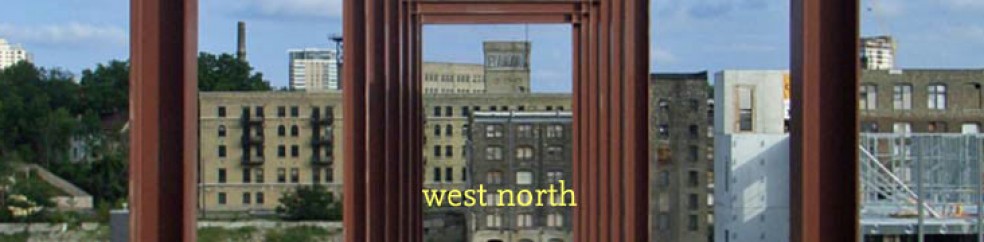
– The undeveloped portion of Homan Square, Sears’ old headquarters in Lawndale, has been purchased by a developer proposing conversion (of a million square feet in the Sears administration and merchandise development buildings) and new construction for a total of 1,200 (!) housing units. Lawndale’s housing market is not booming; there’s no need to suck all of the somewhat rising housing demand into Homan Square. One resident testified at the hearing, saying first that Alderman Chandler had not presented this plan to the community — which is truly astonishing, given the scope of the proposal — and that other areas of North Lawndale needed investment first. She’s completely correct, but of course the proposal passed.
– Three downtown high rises garnered significant zoning bonuses of 2 FAR for “significant” contributions to the affordable housing trust fund — somewhere between $1-2 million. That’s the profit off of, what, five downtown units?
– The Jeweler’s Row tower [critiques by Lynn Becker | Blair Kamin] was approved, of course. (Of course, since Mayor Daley lives in its precursor, The Heritage at Millennium Park, and the mayor’s brother’s law firm provided counsel.) While preservationists may have thought well of the many landmark districts approved in recent years, it also seems that the Daley administration is undermining the protective authority of landmark status. Solomon Cordwell Buenz has designed a slender, lovely, Vancouver-esque building of greenish glass; the developer has proposed a nice restoration of the podium (the Art Institute and University Club have signed on for lower floor space–Mesa apparently learned from the Heritage that the base should be pre-leased) and yes, the Loop is the right place for density. However, essentially demolishing the existing buildings to insert a 770′ tower sets a dangerous precedent on two fronts. First, the scale completely overpowers both Jeweler’s Row and Michigan Boulevard; while there are already oversized Modern buildings along Wabash, like 55 E Monroe and CNA, the goal of landmarking was to stop future buildings from overpowering the visual unity of Central Michigan. Second, if we can’t count on the landmarks ordinance for protection from massive new buildings, what can we count on? Corfman reports in today’s Trib that the potential new owners of 55 E Monroe (across Monroe from the site) considering a condo conversion of that building’s upper floors — which makes sense as long as, say, National-Louis doesn’t put up its own 800′ tower through the People’s Gas building light court. As Martin Tangora said at the Landmarks Commission hearing last week:
I’m worried about the millionaires that have been coming to you for 25 years with a cottage in Old Town asking to put 5,000 square feet on top and in back — how are you going to turn them down? How are you going to tell the owners of 20 North Michigan, an eight story building that’s one of the oldest in the street wall — how are you going to tell them that they can’t building a 70 story tower on the back all-but-30-feet of that lot?
What the city council should do instead is pass an ordinance authorizing the sale of development, or air, rights from landmark buildings to adjacent or nearby sites. This would allow owners within landmark districts to cash out, provide the density elsewhere, and maintain the historic scale of landmark areas. That way, the Cultural Center could have gained millions to protect the Heritage’s views; Tree Studios’ gardens wouldn’t have had to be ripped out and excavated for a subterranean retail box, etc. We do have a never-used “adopt-a-landmark” zoning bonus provision, but TDR is much more direct and understandable to developers.
– A 51-story residential tower on midblock Ontario just east of Michigan was also approved. SOAR and GNMAA oppose the proposal on traffic grounds, which is entirely appropriate: the PD upzones the site by one third, from 12 to 16 FAR, and then applies bonuses for setbacks and an affordable housing trust fund contribution — for a total of nearly 22 FAR. The entire intent of the bonus provisions in the downtown zoning was to encourage public amenities in return for upzones, but in this case most of the upzone has no basis in public amenity whatsoever. The other Near North upzone, over at Ontario and Orleans, at least had some basis in public purpose: the developers will rehab an old loft building and keep it in commercial use, while using an adjacent vacant lot for their 455′ condo tower.
As a rep from SOAR stated, the traffic “impact of new buildings should not be evaluated on single buildings alone”–the neighborhood actually needs some sort of planning on a site-by-site basis. Natarus says that he’s proud of the neighborhood’s opposition, since it shows that he did have “an open process.” Um, an “open process” doesn’t mean that you asked, didn’t listen to, and finally ignored input.
– The condo boom continues, but for how long? Just today’s agenda:
Address Area Floors DU 110 W Superior River North/Cathedral 26 77 21 S Wabash E Loop/Jewelers 71 353 3517 W Arthington Lawndale/Homan 8? 1,200 301 W Ohio River North/Gallery 37 240 148 E Ontario Streeterville 51 165 2559 S Dearborn Bronzeville* 7 93 1255 S State South Loop 19 253 1454 S Michigan South Loop 30? 215 1001 W Van Buren** West Loop 24? 145 3600 S Western McKinley Park 4? 236 TOTAL citywide 2,977
Next month promises at least 163 more DUs, although given the way things have a way of magically appearing on the agenda at the last minute, I wouldn’t be surprised if that balloons to 1,000+.
* interestingly, this WAS the old Lyric Opera warehouse, site of the legendary costume sales that brought thousands to a dumpy area right by Dearborn and Ickes (?) Homes.
** amending a long-stalled proposal of around 300 units; numbers are for the additional DUs allowed by the amendment. Student housing across the freeway from UIC? Who would have thought?
 west north