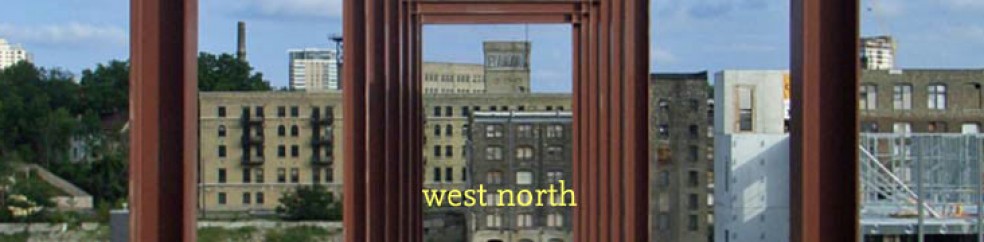
Well, not quite. While admiring the 2005 bike map, I decided to see how many Chicago community areas I have neither walked nor cycled in and found five: Avalon Park, Burnside, Calumet Heights, Dunning, and Mt. Greenwood. The first three are in a triangle south of the Skyway and southeast of Chatham — not too difficult, and near some interesting street patterns I want to check out. The latter two are at the city’s edges. Dunning is due west-northwest, but literally has nothing to see but miles of bungalows (including Schorsch Village) and an asylum. Mt. Greenwood has the Agricultural High School, Cook County’s last working farm.
Monthly Archives: August 2005
Transit oriented banking
A curious thing: the 2005 Chicago bike maps were paid for by Chase/Bank One as part of its Bike One marketing scheme. (Personally, I suspect it’s because LaSalle has had pretty good success “owning” many of the local running events, notably the Marathon.) This year’s map notes the many recently opened branches around town. Curiously, a good many are within one block of CTA stations — most obviously following the Blue Line out along Milwaukee, where before there were no branches between the West Loop and Avondale, now four branches have sprouted within a block of the Blue Line between Division and Logan Square, plus two further from the train. This is in addition to the ATMs placed inside many stations. Of course, this makes eminently good sense — many stations have existing retail clusters around them, and people want convenient banking that fits into their daily schedules, and many of said schedules include the train — but it’s still interesting to have this longitudinal comparison.
CTA stations that Bank One has opened branches within two blocks of in the past year:
Red Line: Cermak, Harrison, Chicago, Sheridan, Lawrence, Bryn Mawr, Thorndale/Granville
Brown Line: Armitage, Irving Park, Western, Kedzie
Blue Line: Logan Square, California, Damen, Division
Orange Line: Roosevelt, Pulaski
Purple Line: South Blvd.
Triangle awards huge TOD contract
The “Triangle Transit Authority”:http://ridetta.org/Home/News_Events/8-05TTA-Cherokeetalksbegin.htm recently awarded a major contract to guide development around the future TTA rail stations. I’m not quite sure whether this is also a management contract for the station facilities themselves or what, but hopefully having a developer in the playing this early on will ensure that station land is used for development before parking. Oddly enough, the contract winners: PB PlaceMaking, run by CNU long-timer GB Arrington, and Cherokee Investment Partners, run by Tom Darden. I sat next to Tom Darden, Jr. in sixth-grade science class — and in seventh grade orchestra, sat behind now-Raleigh Mayor Charles Meeker’s son. Small world.
bq. the Triangle Transit Authority on its transit-oriented sustainable development project. The regional rail system has the potential to help shape the future of this region,” Darden said. “Transit oriented development — a blend of retail, office, housing, entertainment and recreation — is a critical element to mass transit systems nationwide.”
Jack Hagel in “the N&O”:http://www.newsobserver.com/front/story/2752582p-9190305c.html quotes Darden: “We would be looking for development that would be relatively urban, which would support transit infrastructure and benefit from it.”
Walking for heart health
Nicholas Bakalar writes in “the Times”:http://www.nytimes.com/2005/08/23/health/nutrition/23walk.html
bq. A Scottish study demonstrates that the walkers are more active during the rest of the day than their peers who arrive by car, bus or train. Why walking to school encourages greater physical activity is not clear, but the authors speculate that a morning walk may stimulate further social interaction and lead to more exercise.
Those physical activity habits, over the course of a lifetime, would help millions of people. Renowned cardiologist Jeremiah Stamler, in a “Times interview with Jane Brody”:http://www.nytimes.com/2005/08/23/science/23conv.html?pagewanted=1, points out that “only about 5 or 6 percent of people 35 and over are [at] low risk” for heart disease.
Enviro action at home made simple
Well, simple to understand, but the spirit of Gar Smith’s 50 Difficult Things You Can Do to Save the Earth lives on. Umbra over at Grist gives a quick, peer-reviewed overview of highly effective environmental choices. Topping the list, naturally: “buy the most fuel-efficient vehicle possible, and use it as little as possible,” followed by home energy efficiency (lightbulbs, appliances, windows) and citizen action (letter writing, joining groups). The Consumption Manifesto puts it all a bit more elegantly:
- Reduce, Reuse, Recycle.
- Stay close to home.
- Internal combustion engines are polluting and their use should be minimized.
- Watch what you eat.
- Private industries have very little incentive to improve their environmental practices.
- Support thoughtful innovations in manufacturing and production.
- Prioritize. Think hardest when buying large objects.
- Vote.
- Don’t feel guilty. It only makes you sad.
- Enjoy what you have — the things that are yours alone, and the things that belong to none of us.
This comes to mind partly because someone on the Critical Mass list keeps retreading some tired PETA numbers about how meat is worse for the environment than driving. Um, nope; that’s specious even on the weight principle: even if the average American goes through hundreds of pounds of meat each year, that’s nothing compared to the collectively thousands of pounds of car and car-related products (principally gas & oil), and the environmental impact of the latter per pound vastly exceeds the impact of the former. Sure, we should all curb meat consumption and eat lower on the food chain, but I’m not about to be guilt-tripped into changing my well-considered, mostly-local, low-meat, high-organic diet anytime soon.
Study: Calif. fiscal zoning just silly
Sharon Simonson in the Silicon Valley Business Journal reports on a newly done study showing that someone’s finally discovered the obvious: the fiscal zoning that has most California municipalities afraid to build any housing has little basis in reality.
“Generally speaking, if a home is of high-enough value and it houses a higher-income family in it, there is a tipping point at which” it becomes a financial benefit to the city to allow it to be built, Mr. [Darin] Smith [of Economic & Planning Systems] says. He does not know what exactly that price point is, he says.
Since Proposition 13 exempts new property sales, cities get to claim full property tax revenue from any new housing. Back in Cary (ten years ago, albeit with pretty rich services), I remember hearing that houses worth over $250,000 or so paid enough in property taxes to more than pay for the city services they demanded. Any new housing in California almost certainly will sell for multiples of that break-even figure — which makes cities like San Jose look stupid when they reject new housing in favor of even more auto malls or office parks, just to boost the jobs-per-household figure (and presumably download the households onto some other poor schmuck.)
Incidentally, the study was done to advocate a faster development timetable at Coyote Valley; a scheme for developing the valley with offices and housing won a CNU Charter Award this year.
Prosperous
Another weird multiculti twist: the US mint is cashing in (literally) on “8” mania with its Prosperity Collection of collectibles. All feature dollar bills with serial numbers prominently featuring the number “8” (sourced from Fed #8, in St. Louis) and generous splashes of red. Puts a new spin on “lucky money,” I suppose.
If they were really smart, they’d market these through Chinese-owned banks as well — red envelopes of lucky money are particularly popular at New Year but also given throughout the year as token gifts.
Internet Archive: Trixie elections!
Thank goodness for the Internet Wayback Machine, which has the results from the Lincoln Park Trixie Society’s 2000 board member elections, complete with candidate photos. Sadly, though, the detailed platform of Kate Sheridan (“Will launch the “Center for Necessary Transportation” (CNT) and the “Starbucks Efficient Mortgage” (SEM) for Trixies living in the village”) has been lost to history.
Only in America
A Chinese fast-food franchise at an airport is managed by a company owned by a Black Muslim named Jabir, except that it’s really run by a white guy named Tony. [from Chicago Journal]
Food tours
One idle idea of mine has been a bike tour of food factories — a throwback to those kindergarten tours, but this time much cooler because adults ask better questions. We all know that Vienna Beef doesn’t do factory tours (I wonder why), but Eli’s Cheesecake certainly does. In particular, four great specialty food manufacturers operate on the near west side: Goose Island Brewery, Intelligentsia Coffee, Red Hen Bread, and Vosges Haut-Chocolat. Intelligentsia does public tours, but the rest?
Electioneers’ designs
A good election poster conveys a simple but warm message with bold graphics, bright colors, and clear type. Examples from the current German election:
- The Left: Living wages yes, cheap jobs no.
- Greens: Free from oil — Let’s do it! (others include Yes! to pure food and New Ideas, New Jobs — Let’s do it!)
- CDU: Better politics. More growth. More jobs.
The only distinctively German thing about these examples appears to be the typography: at first glance, several of the fonts appear to be from FontShop, which carries many clean-but-humanist Dutch and German fonts.
Contrast these to American electoral posters, with their poor typography, utter lack of message (besides candidate names), and the same old tired stars, stripes, red, white, and blue motif — or to US electoral sites, most of which suffer from overload: small print, poor contrast, and busy graphics. Curiously, neither major party has either an official color or logo, both essential components of any branding campaign. Maybe some of this has to do with how Americans reach voters — via television in private homes — versus how European parties, with smaller budgets and more public spaces for walk-by outdoor advertising.
Stop that yelling
Today’s random find: in 1901, residents of East Garfield Park were riled up over the noise problem in the 13th Ward. Most disconcertingly, they wanted a proposed roller coaster (“centrifugal railroad,” for how centrifugal force would keep it on the tracks in a loop) stopped, as “they dreaded the yelling this novelty would produce.”
It’s hard to even imagine a time when (a) roller coasters were so close to houses that they could be heard from there, as amusement parks now have to locate out in the exurbs to get the needed quantities of parking; and (b) yelling was a primary concern of voters.
 west north