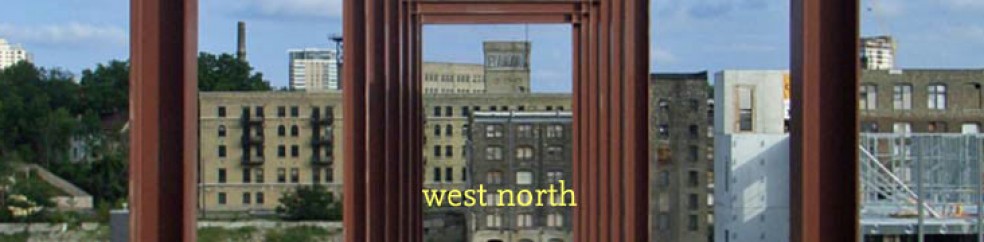
- You know that loft living has gone mainstream when it appears in Rocky Mount and Clayton, N.C.
- Residential parking districts in Boulder allow 2-3 hour free parking during the day and sell parking permits to businesses and commuters — at 5X and 18X the resident price, respectively. The system still favors residents without excluding other users. (The first breach in Chicago’s obscenely underpriced RPP is the $300 citywide permit, available to people like real estate agents and home health aides.)
- Fred Camino at MetroRiderLA diagnoses the problem with TOD as practiced in LA: parking. “Providing ample parking for vehicles orients people away from transit. But the developers don’t care because they know they won’t be able to sell their units at a ridiculously high price to the Dr. Cosmatos of the world without providing ample parking for residents and their guests. Essentially they are saying fuck transit. So Transit Oriented Developments in Los Angeles, as they stand now, are indeed bullshit and do not help reduce traffic, pollution, congestion or incease transit usage.”
- Denver appears to be the first city to have instituted a “label match-up” law requiring motorcycles to have exhaust systems that meet EPA noise control standards. (Current laws usually rely on decibel meters, which are expensive, time consuming, and hard to use.) Motorcycle groups inevitably cried foul, citing a “double standard,” but at least one publication agrees:
Instead of basing the requirements on the actual equipment, [legislation] tend[s] to specify sound levels, but those are hard to measure properly and require enforcement agencies to buy the necessary equipment and train personnel in its use. If legislators started by requiring exhaust system to bear the same markings found on stock pipes that show they meet EPA sound-level requirements as well as a measured noise standard, it would be easier for police to enforce. It would also give aftermarket exhaust manufacturers reason to start creating legal systems. We believe that this would be the most effective tactic… At the moment, many law-enforcement agencies find their hands tied. They cite a motorcyclists for an obviously loud exhaust, but in court they lose because the wording of laws makes the standard unclear or the measurement requirements too difficult. Art Friedman, Motorcycle Cruiser, 30 June 2003
Apparently, Alderman Natarus asked the city to investigate “sound cameras” to issue citations based on a built-in decibel meter — another problem with enforcement is that vehicle noise is always on the move and thus hard to track. Interesting idea, although avoiding cites for emergency vehicles, etc. might be a challenge.
The journey’s half the fun
Transit: it’s just a way to get there. Many transportation projects become infrastructure driven, building rail for its own sake. In Charlotte, though, the leaders recognize that transit is only half the equation. What’s really needed is a different way of living, one that transit is an integral part of — and viewing transit as an isolated solution won’t get you there.
Debra Campbell, planning director for the city of Charlotte, interviewed by Zach Patton in Governing magazine:
Transit is a means; it’s not the end. The end is high-quality development and a way for us to promote better development to make sure we’re better stewards of our community and the environment.
It’s also about giving lifestyle choices. Charlotte had gotten to the point where there was really only one lifestyle: suburban half-acre lots. We will never ever do away with our suburban cul-de-sac communities. They’ll always be a choice for our residents…
We never, ever, ever said transit was going to be a panacea. It’s just about providing a choice. A big part of that was bringing in the transit folks, the engineers, the planners and the developers to talk to the public, so it wasn’t just seen as a transit project.
That monoculture of suburban half-acre lots will ultimately drive many more people away from Sunbelt cities — I’m certainly not the only one.
Virtually attend MPC lunches
Video is now available for two recent MPC panels, courtesy of CAN-TV. No pre-registration and no insipid Corner Bakery box lunches. (They were much better when they had fresh chips.)
Fred Kent from the Project on Public Spaces, on Streets as Places, with a response by CDOT’s interim commissioner and Tom Samuels from the 48th Ward office. This was pretty good, but the local response paled in response to Kent’s inspiring (if generic — I’d heard it all before) call to action.
Parking 101, a panel discussion on district managing parking and update on the Parking Benefit District concept as it moves towards reality in Chicago. Haven’t yet had a chance to view this, but it got good reviews.
Buying our way to greenness
An article by Alex Williams in the Sunday NYT talks about “light” and “deep” green, timely given the recent rocketing ascendance of pricey green gear:
“A legitimate beef that people have with green consumerism is, at end of the day, the things causing climate change are more caused by politics and the economy than individual behavior,” said Michel Gelobter, a former professor of environmental policy at Rutgers who is now president of Redefining Progress, a nonprofit policy group that promotes sustainable living.
“A lot of what we need to do doesn’t have to do with what you put in your shopping basket,” he said. “It has to do with mass transit, housing density. It has to do with the war and subsidies for the coal and fossil fuel industry.” […]
“We didn’t find that people felt that their consumption gave them a pass, so to speak,” [Michael] Shellenberger [of market research firm American Environics] said. “They knew what they were doing wasn’t going to deal with the problems, and these little consumer things won’t add up. But they do it as a practice of mindfulness. They didn’t see it as antithetical to political action. Folks who were engaged in these green practices were actually becoming more committed to more transformative political action on global warming.”
Modest proposals dept.
Wow, and I thought I was militant:
But I have a suggestion that would raise money for the city, reduce vehicular traffic in the Loop and not require a huge collection apparatus.
Every week we could have a pedestrian lottery. Those of us who are always on foot could send a ten-dollar check to City Hall. On Sunday night, one of our alderpersons would don a blindfold and pick a lucky pedestrian.
The winner would get no money. That would go to the City, the Park District, the CTA, whatever.
Instead of cash, though, the winning pedestrian would get a Glock 9mm semiautomatic pistol and a license to kill (like James Bond).
For one week he or she could prowl our Loop streets looking for the most flagrant violators of pedestrian rights and blast away a no questions, no jail time, just a loud Ka-Pow and the guys from Streets and San would show up to haul away the mess.
Public transportation would never be more appealing.
Jack Zimmerman, one of the downtown Chicago Journal’s columnists, had that modest proposal for cutting traffic and improving pedestrian safety downtown.
And here’s a little gem about how there’s no romance to driving, at least not around here:
If I wanted interesting driving, I’d buy one of those nifty little Ferraris, some genuine kid driving gloves and pick up a skinny-ankled woman named Marcella who would sit beside me and look gorgeous as I tooled around the Italian Alps.
But this is Illinois, Land of Lincoln, a state full of flat land, straight roads and thick ankles. Marcella doesn’t live here.
I will say that even [despite having never learned to drive] I have experienced lovely moments in cars, mostly involving, yes, small cars hugging curves along winding roads in the countryside (and sometimes someone sitting beside me, looking gorgeous). That’s the romantic ideal of “driving as freedom,” not the grinding daily reality of bumper-to-bumper — but yet the caged masses soldier on. Sigh.
The Stroll
One of the to-do items for our SSA is a “walking map,” a combination business directory, wayfinding/navigation aid, historic guide, and outline of transportation alternatives. Some best practices of similar maps:
Threatened coastlines

The National Trust has named the hipster coast — Brooklyn’s East River waterfront, along whose shores and uplands live countless hipsters — to this year’s 11 Most Endangered list. Maybe cultural creatives won’t guard the historic urban fabric.
(Photo is of the Panorama, not of the real city.)
Urban advocates spread
Pretty ambitious, too.
The Urban Society of Kansas City promotes excellence in several crucial areas for making a great city: urban design, architecture, effecient government and grassroots economic development…
1. Promote a pedestrian environment throughout Kansas City’s urban core.
2. Achieve within twenty years ubiquitous, convenient and continuously-running public transportation and break the city’s dependence on the automobile.
3. Increase urban core density, especially through a dramatic increase in housing units serving all income categories. Within twenty years, see all vacant lots in the urban core filled in.
4. Through modification of laws and tax policy, create an environment where grassroots efforts of all types flourish.
5. Raise architectural standards and encourage adherence to appropriate urban design principles.
Localism
Two local links for today:
* Crain’s has a new Market Facts 2007 online. The interactive skyline view is particularly intriguing.
* Chicago Magazine posted its depressing “How Bucktown Got Boutiqued” timeline (written by Rebecca Little). Since it was published, BCBG signed for the space next to Marc Jacobs. At least they’re not displacing any other retail shops — the space is in a loft which had an elevated first floor, now lowered to ground level in a pretty tasteful way.
The SSA received an encouraging response to its planning RFP, so we might have some good ideas on how to fight back against the chain invasion soon.
Politics for the next generation
A recent Washington Monthly featured a piece by Zachary Roth on how U.S. Rep. Tim Ryan — a Democrat from the moribund parts of northeast Ohio surrounding Akron and Youngstown, and elected to Congress at the tender age of 28 — is attempting to forge a new politics that will speak to the interests of Gen X-ers and Millennials.
Ryan’s one of the “fighting Dems,” another former football star with fiery anti-Bush rhetoric, is reaching for a pro-trade message that acknowledges the fact of globalization, countering it with a renewed focus on education — and selling the message with attention-grabbing political theater.
“In our part of the country, we have a very strong cultural tie to steel,” Ryan told me later. “And whether we like it or not, the world has changed.” The speech, he said, “was a challenge to change your way of thinking.”
Yield
This fascinating video from NYC Streets Renaissance demonstrates what must be among the most satisfying jobs I’ve ever seen: a city staffer in Portland whose job is to be a decoy, nabbing drivers who roll through crosswalks. The sometimes maddeningly deferential Northwestern driving culture didn’t just arise out of thin air; it owes at least something to strong enforcement of the existing laws.
NYCSR/Transalt also has this amusing flowchart of the positive feedback loops one can expect with congestion pricing:

Your transit authority cares
WMATA, DC’s regional transit agency, uses a rather impressive array of community outreach tools that increase transparency about the system’s workings and governance. Among them:
– LunchTalk live online chats with system officials
– a Riders Advisory Council that meets monthly
– webcast meetings, not only of the board but also of upper level staff
– a separate Elderly & Disabled advisory committee that meets monthly about paratransit and accessibility
MBTA not only has an independent governing board, but that board sponsors TransitWorks, an independent group (funded by TMAs, it appears) which administers surveys and a “mystery shopper” program.
Out in LA, Global Inheritance — which has carved a niche for itself by supporting environmental initiatives like recycling and ridesharing at youth-oriented music and sports events, recently held a Public Display Of Affection concert and exhibit at Union Station, “to show public transportation in Los Angeles a little love.” Admission? One inbound MTA ticket.

