Friday photo: CIAM’s embarrassing questions about your rowhouse

Jose Luis Sert book: Why is your house gloomy?

Can Our Cities Survive,” Jose Luis Sert’s provocative 1942 treatise on the future of Western cities, posed this set of “embarrassing” questions to residents of the era’s cities. Those who claim that rowhouses are uniquely well-suited for families might recall that, not that long ago, they were widely seen as “gloomy” and unfit for family habitation unless extensively modified — and that most of America still thinks so.

Of course, Sert was largely wrong — in particular, the automotive menace should be solved by restricting the cars, not the children — and the Modernists were never quite successful at convincing families that high-rises were worthwhile.

Attitudes had softened just a bit by 1950, when the regional chapter of the AIA issued a report called “Of Plans and People.” Washington was then in a frenzy over the need to house its exploding population. Rowhouses were merely “disreputable,” rather than intrinsically awful:

Home owners have insisted on increasingly severe restrictions against apartment buildings and row-houses–this despite the fact that for many families they are the most suitable forms of housing. Part of this opposition results from the crude design of these buildings. The ugliness of the typical Washington row-house with its two-story back porches has done more than anything else to bring the row-house into disrepute. If builders were more concerned about good design, the public might feel less need for “protection” against apartments and row-houses.

Friday photo: Cranes at the Wharf, from spring into summer

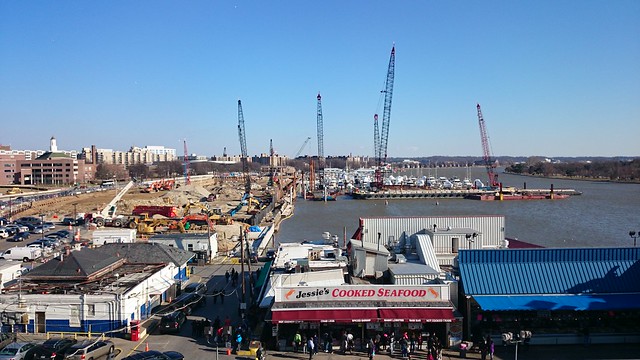
Cranes at the Wharf, 10 July

10 July 2015.

Cranes at the Wharf

15 March 2015.

I’ve been trying out a faux-time-lapse-photo series of the ongoing construction of the Wharf, the mega-project just a few blocks down the street. The photos are taken from the Case Bridge, under the “L’Enfant Promenade, Keep Right” sign.

Since the lower photo was taken in March, the piers have been substantially completed, thousands of foundation piles have been nailed into the ground, excavation has been completed for the sitewide underground parking garage, and some of the first structural supports. Since the site is just about at sea level, substantial pumping will continue to keep seawater out of the hole until the foundation is complete. Two of seven tower cranes have arrived on this side.

Also, be sure to check out my posts at Greater Greater Washington. I used to crosspost all of them, but haven’t done so as much lately.

DC built 13% less housing over the past decade than its own citywide plan calls for

A version of this post was posted at Greater Greater Washington.

Nine years ago, the District of Columbia adopted a Comprehensive Plan to guide planning efforts throughout the city. At the time, the District’s population had just started to perk up after six decades of decline, and the plan reasonably foresaw that growth could continue into the future. Yet even though the District’s population has grown substantially, its housing stock isn’t keeping pace.

Three years before the comp plan was adopted, Mayor Anthony Williams pointed to recent population gains when he announced a bold goal to bring 100,000 new residents to the District within a decade [PDF]. The 2006 Comprehensive Housing Strategy Task Force recommended adding 55,000 new housing units over 20 years (a recommendation reaffirmed by a 2012 housing strategy update). Not only would that figure meet long-term population growth goals (accommodating 114,400 residents at the then-current household size of 2.08), but it seemed attainable: The District issued building permits to 2,860 housing units in 2005.

The comp plan incorporated much of the Housing Strategy, noting in its Housing Element that “The increase in [housing] demand has propelled a steep upward spiral in housing costs, impacting renters and homeowners alike… The housing shortfall will continue to create a market dynamic where housing costs increase faster than incomes.” To address the shortfall, the plan’s very first policy opens with the statement: “The District must increase its rate of housing production if it is to meet current and projected needs through 2025 and remain an economically vibrant city,” and raised the forecast slightly, to 57,100 additional housing units over the plan’s 20-year horizon.

The city as a whole isn’t meeting its goals

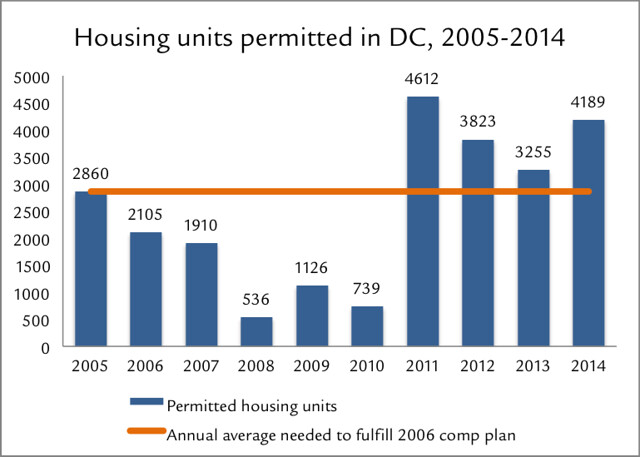
Yet despite all the new construction over the past decade, including two building booms, DC’s currently on track to miss its 2025 goal by 13%. Instead of building 2,855 units per year, DC’s averaged fewer than 2,500 each year over the past decade.
dc permits

The big reason why is that homebuilding nationally came to a near-standstill during the 2008 crisis, and the District was no exception: building permits crashed by 81% from 2005 to 2008, and remained at low levels through 2010. Many proposed projects, like CityCenterDC and Half Street, came to a halt when banks collapsed. Yet all that time, the city’s population, and thus the demand for new housing, continued to grow.

Construction has since rebounded to new highs, with 39% more building permits issued each year between 2011 and 2014 than in 2005. Still, the new boom hasn’t yet erased the 3,000-unit backlog from the slow years.

To get back on track, building permits would have to keep up at recent years’ record-setting pace for at least another three years — and perhaps longer, since the next ten years will also inevitably include another economic slowdown that will subdue construction.

Housing growth has lagged population growth

Even though housing construction has lagged projections, the city’s population has continued to grow. Instead of moving into new housing, all of these new residents have in recent years just filled holes in the existing housing stock.

Vacant units — the slack in the District’s housing market — have steadily disappeared in recent years. Between 2010 and 2013, the Census reports that the number of vacant housing units in the District plummeted by 13,319 (or 31%), far outpacing the 6,850 units that were added to the District’s housing stock.

It’s convenient that so many vacant housing units just happened to be available just when the District’s population began booming, but that feat can’t continue forever. A growing population will, at some point, require new housing.

Indeed, current market indicators show that there’s still tremendous demand for newly built housing: Even though a record number of new apartments have been built, they’re being snapped up as soon as they’re available.

The recent slowdown in the District’s population growth isn’t reason to rest: It could be that slower population growth is a result of inadequate housing growth. Slower population growth largely results from reduced domestic migration, and the reason behind domestic out-migration from DC is because of its inadequate housing. (No surveys track why people choose not to move to DC in the first place, but the reasons are likely similar.)

Yet meeting local environmental goals requires even more population, and housing

David Alpert’s article on Sunday referred to the District and the greater Washington region’s aspirations to a greener future, which require that the District add many more residents. DC’s Sustainable DC Plan, which was adopted in 2012, acknowledges that the District needs to “increase urban density to accommodate future population growth within the District’s existing urban area,” and sets a target of welcoming 250,000 new residents by 2032. That target implies at least 100,000 new housing units, a figure confirmed by recent studies from George Mason University and echoed in the region’s long-range plans.

Adding more residents to the region’s core will result in a substantially smaller environmental impact than adding those residents at the region’s edges. Accommodating more population growth within existing built areas, like the District, reduces the overall environmental impact of new development, and not only by diverting pressure to pave over outlying wildlife habitat and green space.

People who live in dense settings close to the regional core live more lightly on the earth as a matter of course: Residents of the urban core drive less than half as much as residents of sprawling suburbs — a fact that regional transportation plans rely upon to keep traffic congestion, and road expansion, down.

DC can take a fresh look at housing

As Alpert wrote on Sunday, “a great opportunity” to review DC’s housing needs “will come when the District begins the process of revising its Comprehensive Plan.” As part of that review, the Office of Planning should examine the comp plan’s policies in light of the District’s new, more ambitious goals — and the District’s failure so far to deliver sufficient new housing to meet demand.

Yet it’s getting harder, not easier, to build new housing in the District. New zoning restrictions, like the “pop-up ban,” have made it even more difficult and costly to build new housing units in large swaths of the District. Even when proposed developments meet existing zoning, they often face costly and time-consuming litigation.

Since the comp plan guides the zoning regulations, a revised comp plan should guide future zoning changes to make it easier for the District to meet its housing and environmental goals. A revised comp plan should also determine where new housing can and should go; a future post will show how the existing comp plan has fallen short in that regard.
Friday photo: The pre-NIMBY era

Once upon a time, before there were NIMBYs

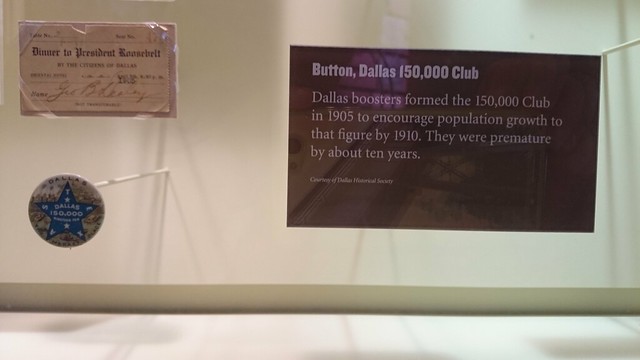
Once upon a time, citizens’ leagues sought greater population as an end unto itself, knowing that more people would bring more services and more opportunities. Dallas is still famous for its boosterism, but nowadays talk of more growth will probably bring out at least a few complaints about traffic congestion.

(Button seen at Old Red, the Dallas County history museum.)

Friday photo: Mixed residential densities vs. single-density zoning

Richmond: around the Fan

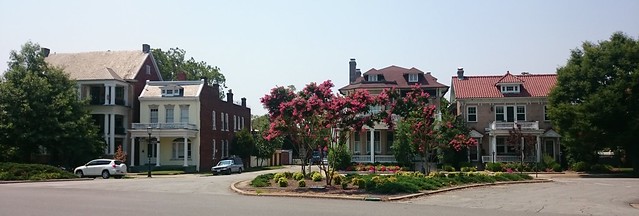
Monument Avenue at Belmont, Richmond, Virginia: one, two, and six-family houses, side by side, on one of America’s most famous residential boulevards

Many of America’s most celebrated urban neighborhoods, like the Fan in Richmond, have a fine grain of different residential densities. Neighbors might live in buildings of broadly similar sizes, but at substantially different densities. But the entire premise of American zoning, as established in Euclid vs. Ambler, was to maintain uniformly single-family districts — uniquely among any country, as Sonia Hirt as shown.

The world’s best loved cities are the way they are not because of zoning bylaws but in spite of whatever zoning may now be in place… Serendipity, complexity, conjunction, anticipation, surprise and delight: these very human experiences are what great cities offer. But zoning is a blunt, inflexible tool. Zoning is by definition exclusionary, limiting things to a preordained set of possibilities. It determines what cannot be done, rather than what can be It does not anticipate nor nurture new, untried forms of city-building or habitation. It does not, in short, encourage the city of desire.

So little of the [American] city was built before zoning was introduced that its more deleterious effects are much magnified. There is very little evidence of the organic city, the intricate web of urban spaces and built forms that rose before the heavy hand of zoning was applied. There is no “old town” core of narrow lanes and multiple layers of use. And there is very little unpredictability, no edge. At the risk of sounding simplistic, it is boring.

— Lance Berelowitz, “Dream City” (Douglas & McIntyre, 2005), pg. 223.

Richmond: around the Fan

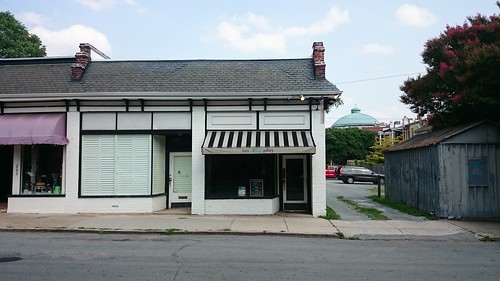
Bonus: down the street, an illegal mix of uses. Orchid shops and churches, oh my!

CNU conversations: Retrofitting suburbia, organically?

Asheville

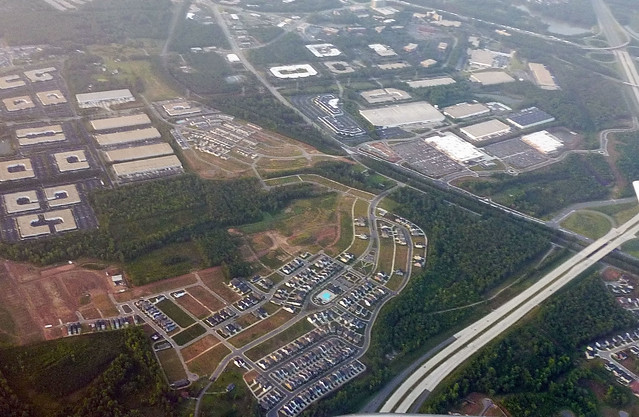
The South Slope area just south of downtown Asheville, now known for its many breweries, had an earlier incarnation as a Motor Mile of auto-related businesses. Before the 1930s, it was mostly small houses.

Now that many cities’ favored quarters have started to run out of pre-war neighborhoods (e.g., streetcar suburbs) to gentrify, the next frontier involves mid-century neighborhoods. Yet the typical cycle of gentrification requires fully depreciated, “aged buildings”,” as Jane Jacobs wrote (and Margie Zeidler marvelously retells).

In these instances, the “aged buildings” — Levittown-era subdivisions, proto-strip malls, little office buildings — suffer from two flaws:

  • An old Modern building can be more liability than asset. The mass-produced materials of that era are often toxic and less-than-durable, and construction quality was sometimes questionable.
  • The density and connectivity are often sub-critical to create a walkable urban place. Infilling is an option, but it is by definition expensive.

Under Neil Smith’s “rent gap” theory of gentrification, these places are doomed to decay and decline until their higher use justifies full demolition and replacement — rehabilitation is hardly even justified. And given the tremendous need to backfill infrastructure, full replacement is particularly costly.

Tactical and modular approaches to infill show some promise at reducing construction costs. To reduce the costs of rehabilitation, certain smaller jurisdictions have thrived through selective non-enforcement of building codes (going beyond a “lean” approach). Even though the very notion of artist-led gentrification began with plenty of code violations, it all seems so much less romantic today.

One possible exception: industrial buildings tend to have flexible interiors, relatively central locations, and (most notably) high lot coverages. In places where their relatively poor street connectivity and access can be surmounted, relatively high job densities could be accommodated within the existing low-rise building stock.

How growing income inequality affects places, part 2: The favored quarter gets richer, the wrong side of the tracks still suffers

The same divergence in fortunes appears to be accentuating price differentials between metropolitan sectors (essentially, “sides of town”). In an economy where the rich are getting richer than everyone else, the rich side of town is also increasing its comparative advantage over everywhere else.

LA office rents

This split was apparent during a recent trip to Southern California. The region might still be “polycentric,” but where one side of town — the Westside favored quarter — now completely dominates local wealth creation. What were merely lopsided prices before have now become absurdly imbalanced, with mediocre buildings on the Westside commanding top rents while perfectly nice areas, like Long Beach and Pasadena, are lagging badly.

In cities where houses or offices on the “right” side of town are scarce, such real estate becomes a privilege only available to the wealthiest people — who, as we’ve noted, are getting wealthier, and in large part because of their houses on the “right” side of town. Even though real estate prices generally track local incomes, the favored quarter of Los Angeles now has prices that track only the exploding incomes of the ultra-rich.

This Redlands ISEA animation of LA-area housing prices from 1988 to 2011, over the course of several cycles, illustrates the “flight to quality” that has occurred during the three busts (mid-90s, early-00s, 2010). At the start, high-value areas are relatively well dispersed across the basin, with only the inner city (particularly the near south and east) suffering from low prices. But, over time, the cumulative advantage of being near the beach increases over time — especially because prices don’t fall as much during the busts, but grow by just as much during the booms.

The trend is perhaps in sharpest relief in high-Gini areas like LA, but is broadly occurring across the country. Joe Light reports in the Wall Street Journal that lower-priced houses are lagging even as prices nationally rebound:

Between January 2006 and May of 2015, the median value of homes in the bottom third of the market has dropped 13% to $101,900, according to Zillow. The median in the middle third is down 6% to $172,600, while in the top third it is off 4.5% to $325,800… The [disinvestment] cycle has been hard to break in large part because low-wage workers have seen little, if any, income growth during the recovery—putting them in weak position to qualify for mortgages.

Recently, Rolf Pendall at the Urban Institute identified the most and least privileged neighborhoods in metro areas nationwide in the 1990, 2000, and 2010 censuses. Over those two decades, the most privileged neighborhoods saw home values rise by an extra $80,000, and their residents actually benefitted from that gain — their homeownership rate is twice as high as in the least privileged neighborhoods. (Since fewer than half of households in the least privileged areas are homeowners, their property value gains accrued to someone else.) Privileged neighborhoods also stockpiled human capital: the growth in their college attainment rate was four times higher than in the least-privileged areas.

This has tremendous implications for intergenerational social mobility, which is closely tied to income, human capital, and wealth. Not only do wealthier families have more private resources for their children, but in a country where schools are largely funded with local property taxes, wealthy communities have more public resources for their children. Three generations ago, legal segregation awarded suburban nest eggs to white families while denying black families the same opportunity — resulting in a “titanic wealth gap” between the races today. (Furthermore, generations of zoning have sought to freeze this status quo, and perpetuate the original injustice)

Thus, the “segregation tax” that penalizes property values in majority-minority communities creates a vicious cycle both for families and for communities, and one that is only getting more pernicious — sadly illustrated recently by the events in Ferguson, Missouri.

Locally, stagnant housing prices in Prince George’s County have contributed to an ongoing foreclosure crisis. Stagnant housing demand from the “underwater limbo” is compounded by its relative isolation from the favored quarter’s jobs engine, and the area’s ongoing “segregation tax” discount. For example, in 1965-1975, the Levitt firm built two large “Levittowns” in suburban DC — Belair in north Prince George’s and Greenbriar in south Fairfax. Even though these are the favored and less-favored sides of their particular counties, near-identical ranches recently sold for an average of $300K in Bowie and $440K in Fairfax.

(An even more striking dynamic can be seen in the Philadelphia area’s twin LevittownsLevittown, PA has property values twice as high as Willingboro, NJ. What’s more, over the 2007-peak-to-2012-trough cycle, Levittown property values declined by only 25%, whereas Willingboro values declined by 50%. And yet, all of the Levittowns began as mostly or exclusively white.)

Meanwhile, formerly moribund downtowns adjacent to job-creating Favored Quarters are finding some success reinventing themselves as the easiest place to add new residential, away from the fierce FQ NIMBYs. The boom in downtown LA’s residential and retail market diverges sharply from its flatlining office market — which still suffers from 20%+ vacancy even though dozens of office towers have been converted to other uses. Downtown Atlanta and Dallas are similarly benefitting from escalating prices to their north.

Friday photo: Greedy developers built your city

Two rental houses on Capitol Hill

I recently came across these plans by a fantastically wealthy land speculator, seeking to profit by ruining DC’s pristine Capitol Hill neighborhood with a towering building crammed full of tiny rental “microunit” apartments for immoral singles — rather than wholesome nuclear families! This kingpin practices his avarice from posh Fairfax County, within a “resplendent” mansion overlooking the Potomac.

This paragon of greedy, out-of-town developers is, of course, George Washington, the very namesake of Washington city. (Yet another greedy developer, Alexander “Boss” Shepherd, is memorialized with a statue right outside the Wilson Building.) Cities don’t arise via immaculate conception; they’re built by developers.

John DeFerrari’s book Lost Washington has a much more detailed account of the houses, showing that the NIMBY nightmare of “out of scale” “overdevelopment” was indeed what this city, and all other cities, was built on. (Otherwise, we’d all still be in caves!) Washington wrote to his architect, “Although my house, or houses… are I believe, upon a larger scale than any in the vicinity… capable of accommodating between twenty and thirty boarders.” A later, even greedier, developer popped up (and popped-under) the ruined buildings in the aftermath of 1814’s fire, and the buildings grew to six stories tall. Anti-pop-up NIMBYs might take heart from its fate: it then descended into criminal infamy and was bulldozed for a park.

[The plans in the photo above are from GW’s Albert Small Collection. More background, including photographs and illustrations of the houses at various points in time, is at Streets of Washington.]

How growing income inequality affects places, part 1: Rich metros are getting richer

graphs from Emerging Trends 2015

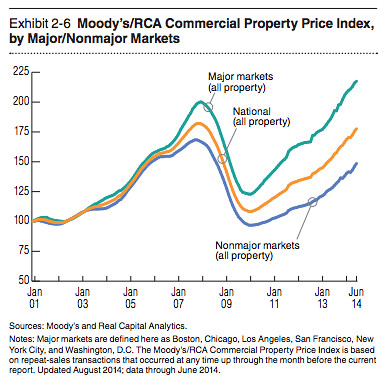
No, it’s not just you: prices are increasing faster in gateway cities than in “nonmajor markets.” Graph from ULI/PWC’s 2015 “Emerging Trends.”

One of the over-arching trends in the post-industrial economy is that the rich are getting richer, to a great extent because technology makes it easier to increase returns towards a few, at the expense of the many. Researchers have recently found that a substantial proportion of wealth inequality is due to higher housing prices — so, it stands to follow that the places which house rich people would also get richer.

Earlier, I wrote that previously accumulated human capital advantages means that “The most valuable places are becoming even more so: they account for not only an outsized share of wealth but also the gains of recent years.” This appears to be taking place both between metro areas and within them.

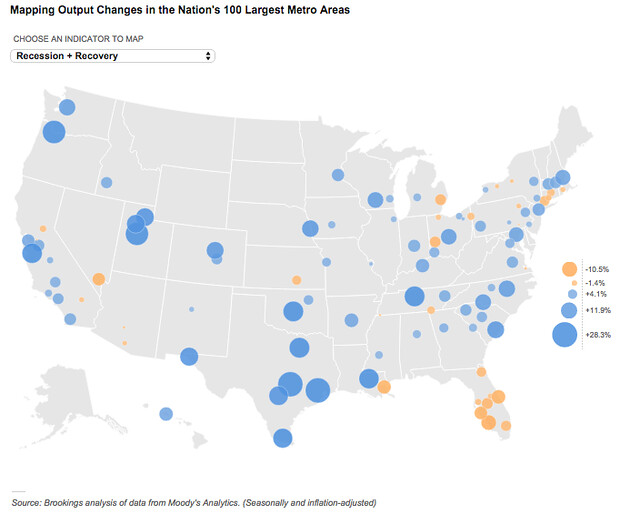
The combination of recession and recovery have had very differential impacts on metro areas, according to the Brookings MetroMonitor. Metro economies whose wealth was tied to housing or manufacturing have lagged, while those tied to technology and energy have grown substantially. (Necessary caveats: This map shows change in gross output, which is heavily influenced by population — both baseline and growth. Thus, it may overstate growth in smaller, faster-growing metros and understate growth in larger, slower-growing metros. Also, the fossil-fuel extraction industry has done very well recently, explaining one-third of Texas’ relative gains, but past performance does not necessarily predict future results.)

GMP change in recent years

So, to some extent, differential price gains are related to income gains — after all, property prices generally track local incomes. Yet prices in first-tier cities, as shown in the graph above, are increasing even faster than incomes, and some form of the hated “speculation” may be at fault. Property in these so-called “gateway cities” is an increasingly popular investment for institutional capital — the money managers who store wealth for the rich. Institutional investors have raised their allocation to real estate by over 50% since 2010; super-low interest rates on cash seem to be behind a surging interest in “alternative asset classes.”

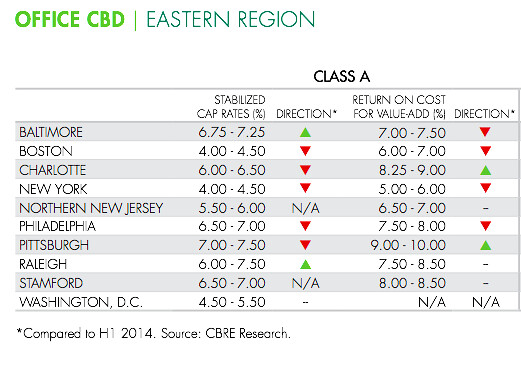
Gateway cities’ large markets and great name recognition means that their real estate values are more stable, transparent, and liquid than smaller cities’ markets. Investors are willing to buy property in gateway cities at lower yields, and thus higher prices (from CBRE’s 2nd half 2014 capitalization rate report):

CBRE 2H2014 cap rates east

Buyers in Baltimore expect 7% yields on their investments, while buyers in DC expect 4.75%. That doesn’t sound like a huge spread, but it’s a 47% difference — a building earning $1M a year in income would command a price of $14,285,714 in Baltimore, but $21,052,631 in DC.

Note that the list is bifurcated: Boston, DC, and NYC, the gateway cities, are all 5% or under, and everywhere else is 6% or up. Investors are willing to pay a lot more money to get the same income in larger (and more reliable) markets, and so prices get bid up.

The same factors that draw equity (ownership) investment to gateway cities also draw commensurate amounts of debt investment — amplifying equity’s effects two to four-fold. Leverage creates a vicious cycle, as we saw during the housing boom: Banks lend based on comparable sales; higher comps mean higher prices are justified, which results in more debt, which raises comps even higher for the next guy.

Friday photo: The first sprouts in a freshly plowed field will be weeds

Country road again

An ecological analogy for retail:

Many of the plants we call weeds originally evolved in tough conditions, where there is annual glaciation, periodic flooding, or severe fires – extreme events that leave exposed, bare earth. It’s in these devastated conditions that our weeds are at home. They germinate first and grow the fastest. And through these characteristics they have found important roles in re-establishing healthy ecosystems… Once the weeds are established, longer-lived plants, less adapted to disturbance, germinate and the process of succession begins. The process may end in a grasslands, woodlands or forest, depending on the soil and climate. Indeed, the weeds create the conditions of their own inevitable demise – inevitable unless of course the disturbance recurs.

The “weedy species” that so many bemoan, the token dry-cleaners and fast-food joints that sprout in brand-new buildings, are one key to building a retail market. Over time, better adapted shops will take root — and given enough stability, species will evolve into very specific ecological niches. These new species will both adapt to their environment, and also change the environment around them. The key is to give the habitat time to evolve by avoiding excessive disturbance — a condition ecologists call “disclimax.”

Cultivating biodiversity requires striking the right balance between stability and renewal. The goal should be less to conserve individuals than to maintain the health of overall communities, to not seek out stasis forever but to manage change for the long term.

Gradual change within human communities also helps to sustain and build linkages, according to a paper by sociologist Katherine King: “A gradual pace of redevelopment resulting in historical diversity of housing significantly predicts social relations.”

CNU conversations: Striking before the neighborhood’s hot

DeKalb Market, Long Island University

Yet more thoughts from our (apparently quite long) lunchtime conversation about community-building.

We talked extensively about how, but where would these strategies have the greatest impact? It’s important to jump off the price escalator — to opt out of the gentrification process — early on, before outside capital floods into the neighborhood.

The “tipping point” in neighborhoods is always tied to outside money. First, an urban neighborhood is “discovered” by suburbanites looking to spend their extra $20s in cute restaurants, then by institutional investors looking for $2 million investments, and pretty soon the whole place jumps the shark. But if the small dollars are ever going to have a chance to win the game, they’re going to have to start early on — or else console themselves to small, subsidized slices of the neighborhood, post shark-jump.

“Favored quarter” locations in gateway cities are probably too far gone (more on this in a future post). Even the immediately adjacent areas have probably been bid up too far to be affordable without turning to outside capital. A Place Corp takes a substantial investment of time, rather than money, so the key is not to overpay.

One approach that can work where explosive change appears inevitable is what I’d call a “waterfall TIF.” This uses redevelopment revenue from a “sacrificial” area — for instance, an underutilized industrial corridor separating a gentrifying area from a stable area — to shore up the affordable housing stock in adjacent areas. Two examples:

  • The Hill District in Pittsburgh is a historically poor, African-American neighborhood overlooking downtown. The Lower Hill was demolished for urban renewal, displacing 8,000, but it was never fully developed, except for one arena. A recently adopted TIF to develop the site will direct property tax revenue “into two separate accounts: one for infrastructure needs in the Lower Hill and one for reinvestment in the Middle and Upper hill.”
  • In Houston, the Midtown TIRZ spent $15 million to purchase 34 acres of the adjacent Third Ward, including hundreds of vacant lots, which was then handed to nonprofits and thus taken off the market.
    • Kinder Institute: “Adjacent to the Third Ward, the quasi-public tax increment reinvestment zone that was transforming Midtown — an area formerly divided between the Third and Fourth Wards — was required to dedicate a portion of its revenues for affordable housing. But [State Rep. Garnet] Coleman saw that property values there were rising so quickly, affordable housing would be a difficult pitch to developers, so he convinced a related agency, the Midtown Redevelopment Authority, to use the money to buy properties in Third Ward instead. The redevelopment authority would then sell the property to developers who were required to build affordable single-family homes and rental units. Today, the authority owns 3.5 million square feet of land in Greater Third Ward. Coleman started banking land through the authority in the neighborhood he grew up in, hoping to buy up enough to make a sizable percentage of its future housing affordable. That scheme has already yielded a crop of single-family homes and plans for apartment complexes.”

By the time the usual affordable-housing resources, like TIF funds and inclusionary units start to flow, it’s already too late — prices will already be on an upswing. For maximum effect, resources need to start flowing before new construction and new investment create new amenities, which raise property values. Of course, this requires neighborhood organization (and probably capacity-building) beforehand, to identify areas about to undergo change, and to plan for the process.

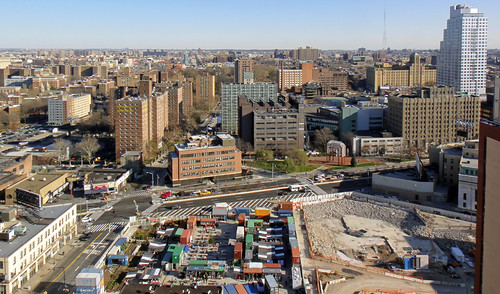
Think of it as an approach comparable to Transferable Development Rights, which have preserved many rural communities, just applied to urban communities instead. To use the photo as an example, imagine if some of the value created by the Downtown Brooklyn rezoning (affecting the sites in front of Flatbush) could also have steered capital funds towards rehabilitating and expanding NYCHA’s Ingersoll Houses (at back right).

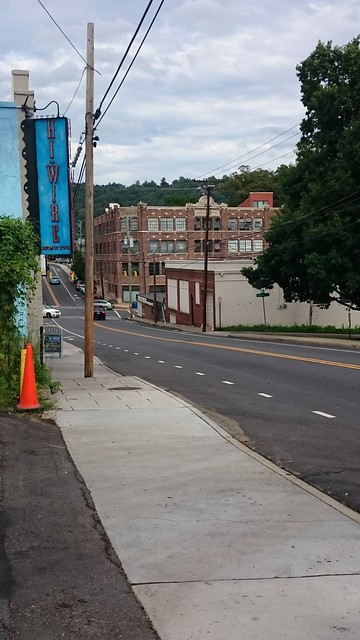
Friday photo: Vanquished twin cities

Pittsburgh various

Vanishing twin syndrome” is an eerie phenomenon wherein one fetal twin seems to absorb another. Its counterpart, in the annals of American cities, might be called “vanquished twin syndrome”: where one city annexes another, then proceeds to obliterate any trace of its core through concerted redevelopment.

Some of the more notable examples are cities settled at confluences, which naturally offer a choice of multiple townsites on various riverbanks.

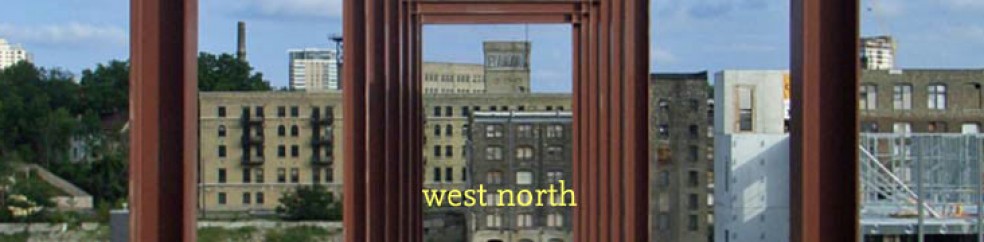
Denver faced Auraria across Cherry Creek, the Allegheny River separated its eponymous town (pictured above) from Pittsburgh, and the fork of the Milwaukee and Menomonee rivers fostered three towns — Juneau (east), Kilbourn (west), and Walker’s Point (south). Portland consolidated with East Portland and Albina across the Willamette. Baltimore subsumed Jonestown to its east, oddly giving its newer rival the nickname “Oldtown.”

Yet as these towns were absorbed into larger cities across the way, the old downtowns of Auraria, Allegheny, and Kilbourn all declined into Skid Rows, offering a uniquely cheap combination of deteriorated, frontier-era buildings within a short walk of the principal downtown. Shunned and looked down upon by the ascendant city’s downtown elite and starved for resources (namely the intra-city transportation links that funneled commuters to the principal downtown), they became prime targets for urban renewal.

Kilbourn was wiped out early on, by a City Beautiful government complex. Allegheny’s center was leveled by Alcoa in the 1960s. Auraria was demolished for a university campus in the 1970s. Oldtown was only partially leveled for housing projects; its main street was then important enough to warrant a federally funded pedestrian mall.

Oldtown Mall

In a weird twist on the theme, Minneapolis absorbed its rival St. Anthony — but proceeded to tear down its own birthplace, while neglecting its rival for so long that it remained standing until the adaptive-reuse age could rescue it.